

is available with mobile devices
THE PROGRAMME
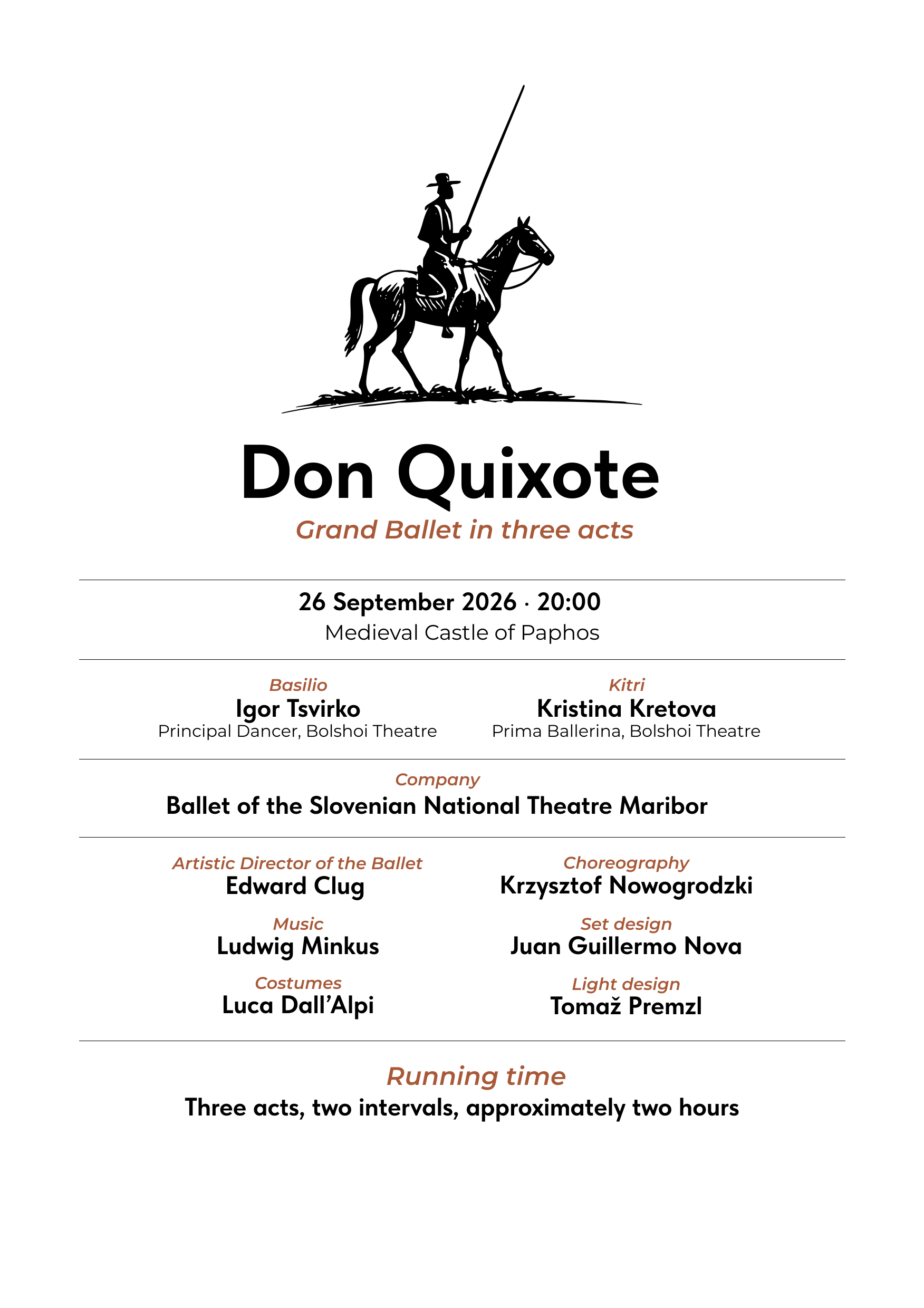
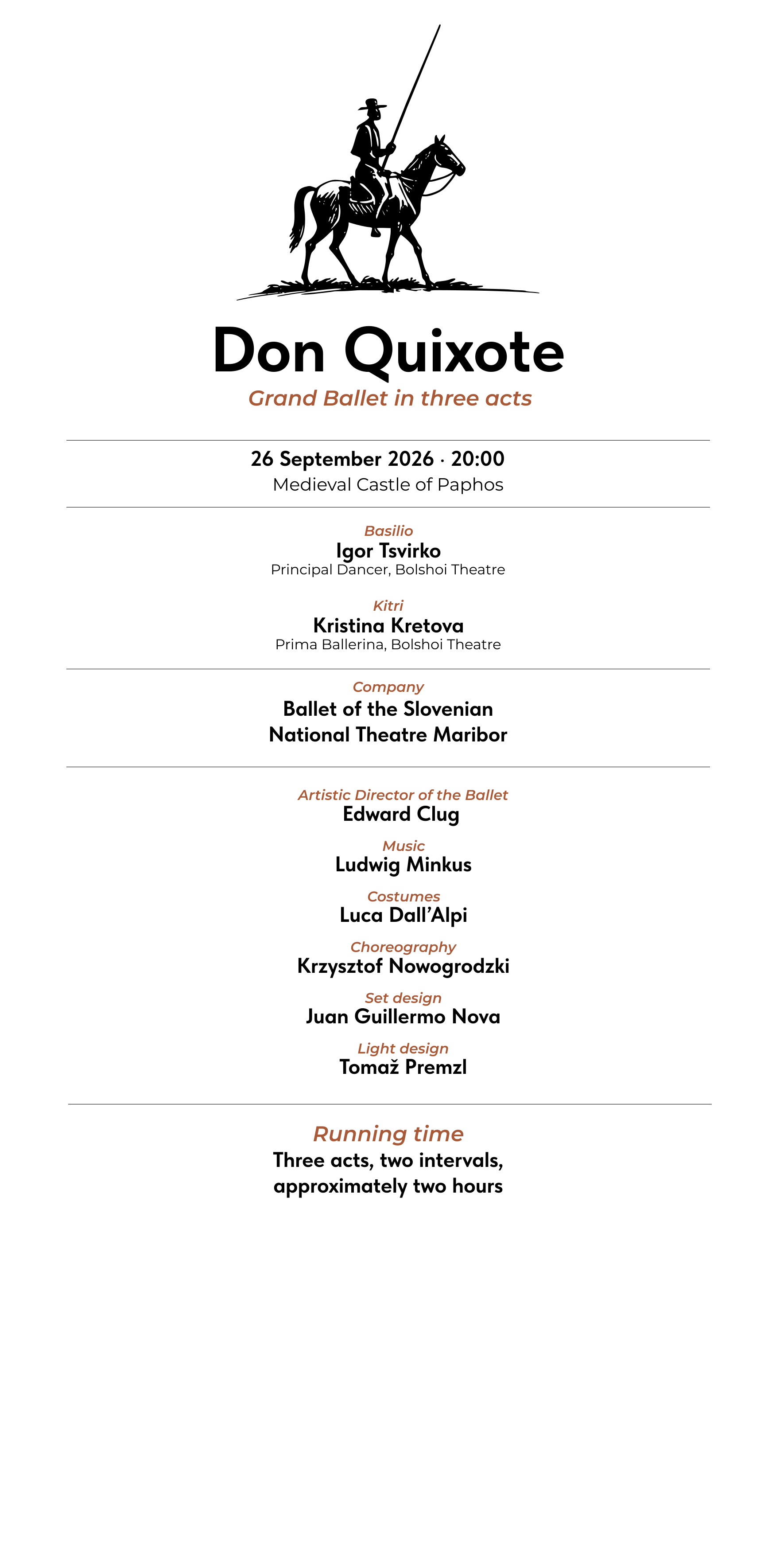
Cast list
Kitri and Basilio
Kristina Kretova and Igor Tsvirko
Don Quixote
Sytze Jan Luske
Sancho Panza
Golescu Mircea
Espada
Ionut Dinita
Mercedes
Asami Nakashima
Espada
Ionut Dinita
Queen of the Dryades
Tetiana Svetlična
Dulcinea
Tijuana Križman Hudernik
Gamache
Lucio Mautone
Gamachina
Ines Petek
Lorenzo
Vasilij Kuzkin
Kitri’s girlfriends
Mina Radaković
Beatrice Bartolomei
Beatrice Bartolomei
Cupid
Ela Narat
Gypsy king
Davide Buffone
Gypsy queen
Beatrice Bartolomei
Tavern owner
Galina Čajka
Ljudstvo
Ines Petek, Mihaela Matis, Cleopatra Purice
Toreros
Matteo Beeckman, Jodin Cozzutti, Christopher Thompson, Aleks Sušek, Tomaž Viktor Abram Golub, Grega Golob
Toreros’ girlfriends
Olesja Hartmann, Tea Bajc, Branka Popovici, Monja Obrul, Nuša Urnaut, Nuška Gujt
Villagers (Seguidillia)
Masten Metka, Matteo Magalotti, Naja Kapun, Aleksandar Trenevski, Ines Uroševič, Maro Vranaričič, Satomi Netsu, Jan Trninič, Mirjana Šrot, Angelo Menaloscina, Lana Drušković, Davide Buffone
Gypsies
Lana Drušković, Jan Trninič, Cioata Adriana, Aleksandar Trenevski, Nuša Urnaut, Jodin Cozzutti, Mirjana Šrot, Tomaž Viktor Abram Golub, Tea Bajc, Matteo Beeckman, Olesja Hartmann, Christopher Thompson, Matteo Magalotti, Maro Vranaričič, Angelo Menaloscina
16 Dryades (Sanje)
Olesja Hartmann, Mirjana Šrot, Beatrice Bartolomei, Satomi Netsu, Monja Obrul, Branka Popovici, Nuša Urnaut, Tea Bajc, Tiana Dolenc, Nuška Gujt, Naja Kapun, Greta Hrastak, Katarina Korpič, Lana Polak
Main Characters
Kitri
The innkeeper’s daughter
The innkeeper’s daughter
One of the few ballerina roles in the classical repertoire who never asks anyone’s permission. Quick, funny, hot-tempered and completely certain of what she wants. Where the heroines of the white ballets are fragile, enchanted or doomed, Kitri is entirely of this world: she works in her father’s inn, knows everyone in the square, and has already decided whom she will marry. The role demands an enormous technical arsenal: the fouettés, the leaps into a blind catch, the fan and the castanets but the technique is never the point. It is the physical form of a character who refuses to be managed.
Basilio
A young barber, in love with Kitri
A young barber, in love with Kitri
Poor, charming, quick-witted and shameless. He has nothing to offer Kitri’s father except himself, so he wins the argument with a trick so audacious that the audience forgives him instantly. He must jump like a competition winner and act like a street comedian, often in the same phrase — a test of stamina and of charm, and charm is the harder half.
Don Quixote
A knight of La Mancha
A knight of La Mancha
He arrives in the middle of somebody else’s story and never quite realises it. He sees giants where there are windmills and a princess where there is an innkeeper’s daughter. The role is danced with restraint: its power comes from stillness, from the gap between his dignity and everyone else’s laughter.
Sancho Panza
His squire
His squire
Hungry, loyal, sensible and endlessly patient. He follows his master into every disaster, complains throughout, and never leaves — the one who knows perfectly well that the giants are windmills and goes anyway, out of love.
Lorenzo
Kitri’s father, the innkeeper
Kitri’s father, the innkeeper
A practical man with a practical plan: marry his daughter to money. He is not a villain; he is a parent, which in comedy amounts to the same thing.
Gamache
A wealthy nobleman
A wealthy nobleman
The suitor nobody wants, least of all Kitri. Elegant, absurd, perfumed and entirely confident that a man of his standing cannot possibly be refused.
Espada
A toreador
A toreador
Swagger given choreographic form — cape, heel work, arrogance and a dangerous kind of grace. With Mercedes he forms the ballet’s second couple, adult where Kitri and Basilio are young.
Mercedes
A street dancer
A street dancer
Proud, sensual and utterly in command of a crowd: heels, back, wrists, and total authority.
Dulcinea and the Dryads
The dream
The dream
Proud, sensual and utterly in command of a crowd: heels, back, wrists, and total authority.
Synopsis
Act One
In his library, an elderly gentleman of La Mancha reads himself out of his own century. Surrounded by books of chivalry, Don Quixote resolves to become a knight errant and to serve a lady he has never met, whom he names Dulcinea. He recruits his neighbour Sancho Panza as his squire, and they set off.
A square in Barcelona, at the height of the day. Kitri, the innkeeper’s daughter, is in love with Basilio, a young barber with no money and considerable nerve. Her father Lorenzo has other plans: the wealthy and ridiculous nobleman Gamache has asked for her hand, and Lorenzo intends to accept.
The square fills — toreadors led by Espada, the street dancer Mercedes, the whole restless population of a town at festival time. Into this arrives Don Quixote. Taking Lorenzo’s inn for a castle and Kitri for Dulcinea, he salutes her with complete seriousness. The crowd is delighted, and Kitri, seeing an opportunity, takes it: she and Basilio slip away together.
A square in Barcelona, at the height of the day. Kitri, the innkeeper’s daughter, is in love with Basilio, a young barber with no money and considerable nerve. Her father Lorenzo has other plans: the wealthy and ridiculous nobleman Gamache has asked for her hand, and Lorenzo intends to accept.
The square fills — toreadors led by Espada, the street dancer Mercedes, the whole restless population of a town at festival time. Into this arrives Don Quixote. Taking Lorenzo’s inn for a castle and Kitri for Dulcinea, he salutes her with complete seriousness. The crowd is delighted, and Kitri, seeing an opportunity, takes it: she and Basilio slip away together.
Act Two
The lovers take refuge in a tavern and then among a company of travelling performers, who take their side. Don Quixote and Sancho, still searching, arrive at the camp. A puppet show is performed, and the knight, unable to separate theatre from life, charges the stage to rescue the heroine.
Then he sees them: giants on the horizon, arms turning slowly against the sky. He lowers his lance and attacks the windmill. He is thrown to the ground and lies unconscious.
In his dream the square, the dust and the laughter vanish. Don Quixote finds himself in a garden of dryads, led by their Queen, with Cupid among them, and there at last is Dulcinea, who has Kitri’s face. For a few minutes the ballet is silent, white and weightless. Then he wakes.
Then he sees them: giants on the horizon, arms turning slowly against the sky. He lowers his lance and attacks the windmill. He is thrown to the ground and lies unconscious.
In his dream the square, the dust and the laughter vanish. Don Quixote finds himself in a garden of dryads, led by their Queen, with Cupid among them, and there at last is Dulcinea, who has Kitri’s face. For a few minutes the ballet is silent, white and weightless. Then he wakes.
Act Three
A tavern. Lorenzo and Gamache have tracked the runaways down, and Lorenzo declares that Kitri will marry Gamache at once. Basilio takes a blade, denounces his fate and appears to kill himself. Kitri throws herself over him in despair.
Don Quixote, who has understood nothing of the plot and everything of the situation, demands that the dying man’s last wish be granted: let him be married to Kitri. Lorenzo, cornered, consents. Basilio rises instantly, entirely alive, to the fury of Gamache and the joy of everyone else. Kitri was, of course, in on it from the start.
The wedding. The whole town dances — a fandango, the toreadors, Mercedes and Espada — and then Kitri and Basilio take the stage alone for the grand pas de deux, the most celebrated wedding in ballet.
His work here finished, Don Quixote takes his leave. He has not defeated a single giant. He has, without noticing, made two people happy. He rides out to look for the next windmill.
Don Quixote, who has understood nothing of the plot and everything of the situation, demands that the dying man’s last wish be granted: let him be married to Kitri. Lorenzo, cornered, consents. Basilio rises instantly, entirely alive, to the fury of Gamache and the joy of everyone else. Kitri was, of course, in on it from the start.
The wedding. The whole town dances — a fandango, the toreadors, Mercedes and Espada — and then Kitri and Basilio take the stage alone for the grand pas de deux, the most celebrated wedding in ballet.
His work here finished, Don Quixote takes his leave. He has not defeated a single giant. He has, without noticing, made two people happy. He rides out to look for the next windmill.
Future events
Whatsapp:
2026 (с) Celebrity Ballet Gala. All rights reserved.
Privacy and Cookie Policy
Privacy and Cookie Policy